“On Leeches” in a Medical Treatise for Humans
The Nepalese Version of Suśrutasaṃhitā 1.13
DOI:
https://doi.org/10.18732/hssa122Keywords:
Suśrutasaṃhitā, leech therapy, medicine, surgery, Nepal, bloodletting, animal medicine, ḌalhaṇaAbstract
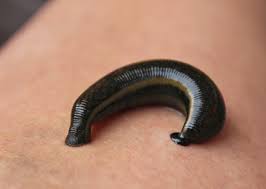
Humans and leeches have engaged in human medicine together for at least two thousand years. Perhaps the earliest detailed description of this interaction is found in a chapter on leech therapy from an early first-millennium Sanskrit surgical treatise, the Suśrutasaṃhitā. There we find descriptions of how humans should classify, care for, interpret, and interact with leeches in medical practice. This article contributes to our understanding of leech therapy in South Asia broadly and to the textual history of this important medical treatise through a comparative study of a newly generated “Nepalese version” of the Suśrutasaṃhitā’s chapter “On Leeches” together with the most widely cited version (Āchārya 1938) that was published with Ḍalhaṇa’s twelfth-century commentary. The final portion of the article presents an edition and translation of the Nepalese version of the chapter “On Leeches” prepared by the author along with members of the Suśruta Project. The edition is based on three Nepalese manuscripts, including a palm leaf manuscript dating from 878 C.E., one of the earliest extant Sanskrit palm-leaf manuscripts of any genre.
Downloads
Downloads
Published
How to Cite
License
Copyright (c) 2026 Lisa Allette Brooks

This work is licensed under a Creative Commons Attribution-ShareAlike 4.0 International License.
Authors who publish with this journal agree to the following terms:Authors retain copyright and grant the journal right of first publication with the work simultaneously licensed under a Creative Commons Attribution-ShareAlike license that allows others to share the work with an acknowledgement of the work's authorship and initial publication in this journal.
Authors are able to enter into separate, additional contractual arrangements for the non-exclusive distribution of the journal's published version of the work (e.g., post it to an institutional repository or publish it in a book), with an acknowledgement of its initial publication in this journal.
Authors are permitted and encouraged to post their work online (e.g., in institutional repositories or on their website) prior to and during the submission process, as it can lead to productive exchanges, as well as earlier and greater citation of published work (See The Effect of Open Access).